_edited.png)
How RV Park Owners Manage Properties Remotely Without Losing Control
- Zander Kempf
- Jan 24
- 4 min read
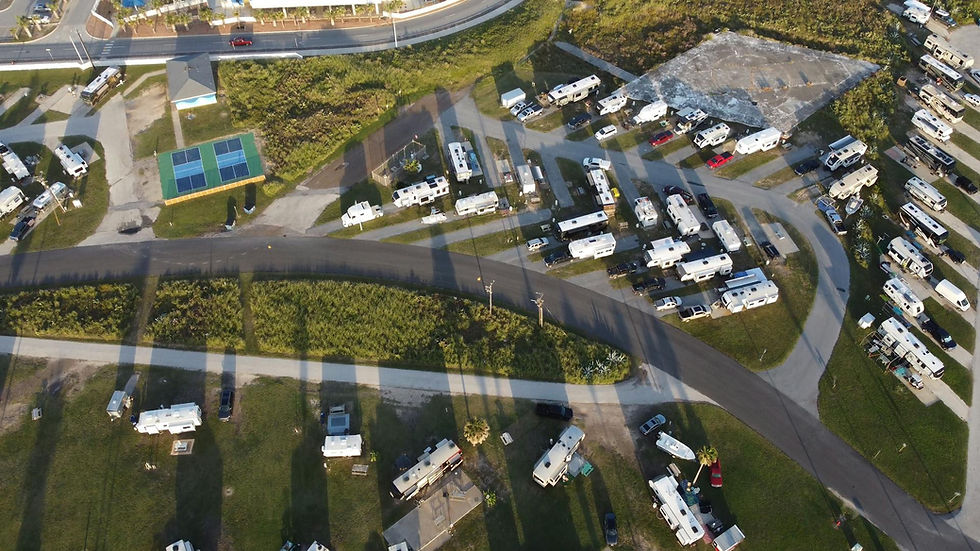
It’s easy to assume that owning an RV park means being physically close to it every day. And for some, being on-site may seem like the only way to stay in control. But we’ve learned that effective investment property management doesn’t always require a hands-on presence. Many experienced RV park owners manage their operations remotely while still maintaining high standards, consistent cash flow, and long-term performance.
What makes that possible isn’t chance, just preparation. It involves putting the right people, systems, and structures in place to support the flow of information, manage expectations, and maintain oversight. Remote ownership takes discipline, not detachment. Here’s how we approach it. Through our Real Freedom Fund, we manage RV and glamping resorts near major national parks and other high-demand outdoor destinations, selected for their potential to generate consistent cash flow and capital appreciation.
Setting the Foundation: Define What “Remote” Really Means
Not all hands-off strategies are built the same. It’s one thing to be uninvolved. It’s another to be clearly organized, informed, and available when it matters.
Remote ownership doesn’t mean a lack of direction. Instead, it means the responsibilities are clearly divided, delegated, and trackable. We’re still making big-picture decisions, but we’re no longer needed for the daily ones. To manage a park remotely with confidence, we focus on three things:
Set clear expectations with operators for what decisions need our input and which ones they can make on their own
Keep access to reporting and bookings at all times to maintain visibility
Use communication tools that keep us looped in, without needing to hover
This keeps us accountable to the performance of the property, without trying to be everywhere at once.
Reliable Teams Make Remote Ownership Possible
No system works well without the right people to carry it out. Remote RV park ownership depends heavily on who is running the property day by day.
On-site property managers, maintenance leads, and hospitality staff play a central role, but they aren’t the only people involved. We also lean on regional vendors, contractors, and service partners who understand outdoor hospitality operations. That way, support is accessible even if something goes wrong. At the fund level, our team handles all property management, financing, and operations, and we partner with experienced operators in each market to keep performance aligned with our standards.
To support our teams from a distance, we do things like:
Establish formal reporting cycles and define performance benchmarks
Use task tracking and communication tools for faster check-ins
Build relationships with backup vendors and trusted local contacts
The strength of the partnership structure makes a real difference. We’re not just choosing property staff, we’re choosing people we trust to manage our investment when we’re not there.
Systems Come Before Scale: Managing Processes, Not People
Once stable teams are in place, we turn our focus toward processes. What really makes remote ownership work is repeatable systems, not reactive fixes. We build those systems before ever trying to expand.
Every RV park we manage uses digital tools for booking, payments, and guest messaging. Systems like cloud-based dashboards let us approve comp nights, see weekend bookings, or flag issues, all without being on site.
Here are a few pieces we rely on to reduce friction:
Property management software that syncs with booking platforms
Automated guest check-in and response messaging
Online payment gateways that handle seasonal pricing and add-ons
By creating standard operating procedures (SOPs) for common tasks, we help ensure consistency, even if staff rotates or properties expand. That lets us focus on performance, not putting out fires. Across our portfolio, these systems support a mix of stabilized properties with immediate cash flow and select value-add projects in high-demand outdoor areas.
Avoid Surprises with Proactive Oversight and Data Tracking
Managing a remote property without regular oversight is a risk we don’t take. The best way to protect against large problems is to look for small ones early.
We set up scheduled check-ins with property managers to review booking trends, maintenance logs, and expenses. But beyond meetings, we also work with live dashboards to monitor property health no matter where we are.
The goal isn’t to micromanage. It’s to stay informed, steady, and available. We keep an eye on:
Month-over-month revenue and occupancy
Guest complaints and issue resolution times
Repair timelines and budget deviations
Investment property management done remotely works best when there are no hidden variables. Visibility builds confidence, and confidence creates space to operate without interference.
Long-Term Control Comes from Clarity, Not Micromanagement
Some owners confuse “control” with “presence.” In our experience, control actually comes from knowing what’s expected and being prepared when changes are needed.
Instead of watching over every task, we spend our time planning for longer-term factors like site upgrades, regulation shifts, and staffing transitions. That means:
Reviewing zoning and expansion potential ahead of annual planning
Tracking licenses and utility usage so there are no lapses
Building contingency budgets so an equipment failure doesn’t derail growth
When these foundation pieces are thought out from the beginning, we can run the property with less worry. The right hires and systems reduce involvement and lower stress, not the other way around.
Freedom Without Sacrifice: How the Right Setup Creates Peace of Mind
Managing an RV park remotely works when the right setup exists from the beginning. We don’t let go of control. We just hold it differently. It’s a shift from being on-site to being on track, from checking in daily to planning quarterly.
The systems, teams, and structures we rely on help us operate confidently without sacrificing peace of mind. Our goals don’t stop at smooth operations. They extend toward cash flow, guest experience, and long-term asset performance.
For us, remote ownership isn’t about taking fewer calls. It’s about building a business that works whether we’re on site or miles away. When that happens, real freedom becomes possible.
At Clear Summit Investments, we know that successful remote ownership starts with clarity, planning, and the right support systems in place. For those interested in how strategic oversight can fuel long-term returns, our projects offer a closer look at real-world applications in outdoor hospitality. We’ve structured each step to prioritize guest experience, operational efficiency, and consistent performance. To see how we apply our approach to investment property management in action, contact us to start a conversation.